
Furniture Wall Fixing & Anti-Tip Installation in London
We identify the manufacturer’s restraint points and assess the wall behind the furniture. After fitting the agreed hardware, we check that the restraint is secured as intended and that doors or drawers can still operate.
Share the furniture model, restraint instructions and wall details so we can review the proposed fixing.
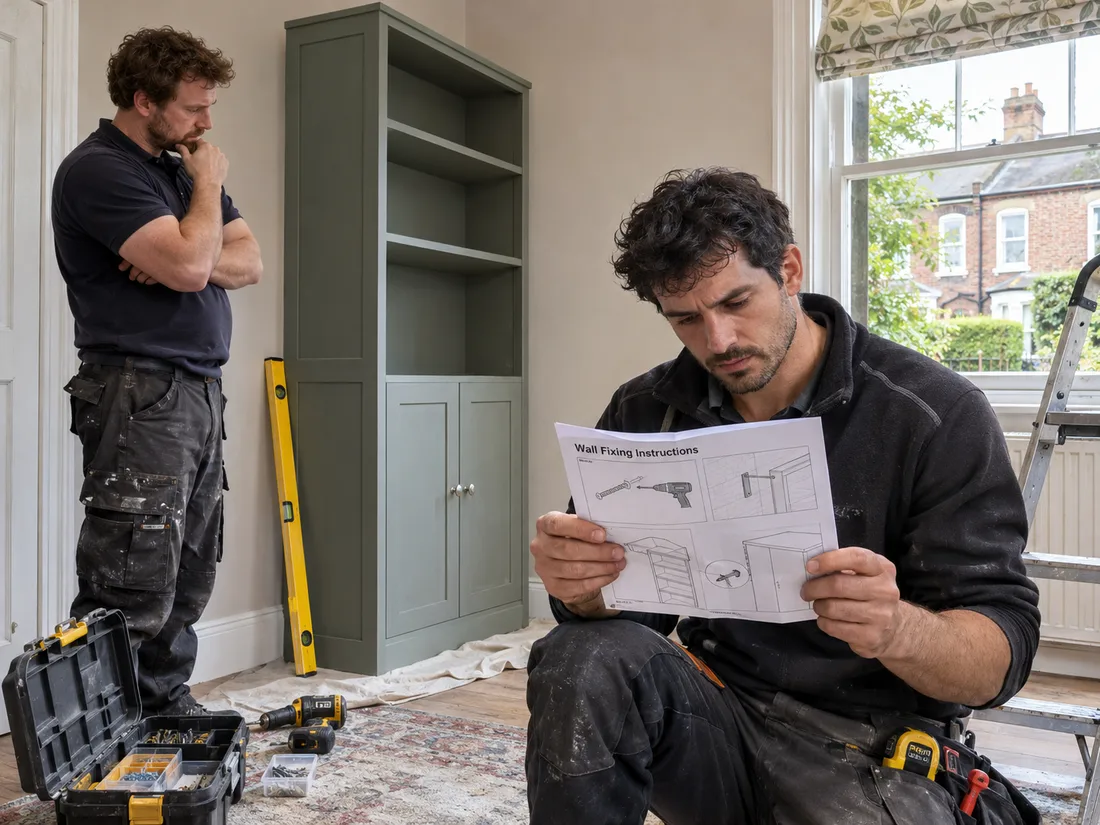
- Manufacturer restraints
- Tall storage and drawer units
- Wall and furniture checks
What to check before booking
Identify the furniture and the restraint
Send the exact model and manufacturer instructions. Tell us whether the original restraint is present and whether the item is already assembled. Mention damage or modifications to the furniture before arranging a visit.
Provide wall and position details
Show the furniture position, skirting and wall around it. Tell us what you know about the wall construction and mention possible obstructions. Confirm that you have permission to fix into the wall.
Check what needs to be included
List each item that needs checking and whether assembly is also required. The product instructions and the wall determine whether the proposed fixing can go ahead. Retain the instructions and follow the manufacturer’s guidance on use.
Start with the furniture manufacturer’s instructions
Give the furniture model and the instructions for the restraint or wall fixing. Include any product label and a photo of the supplied parts. A chest of drawers, tall bookcase and modular wardrobe may have different requirements. The furniture instructions identify where the restraint belongs and which components are specified for that model.
If the furniture has already been assembled, say when and whether it was moved or altered afterwards. Photograph the back and the position where you want it to stand. If a fitting is missing, ask the manufacturer or retailer to identify the correct replacement. Keep any existing restraint parts with the paperwork until the job is discussed.
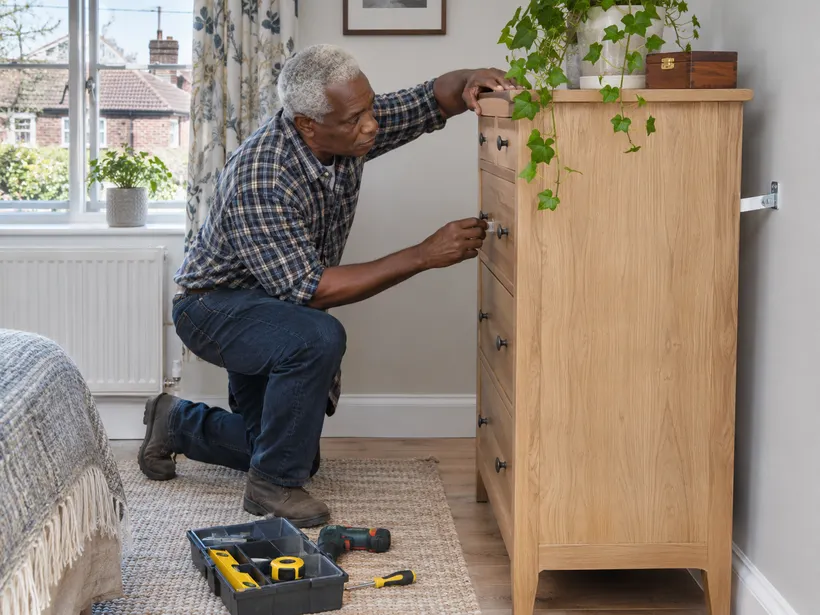
Show the intended wall and the position of the unit
Take a wide photo showing the wall, floor and furniture around the proposed location. Include any skirting or trim that projects into the space. Tell us what you know about the wall construction and whether there are sockets, known pipes or restrictions nearby. If the furniture is going in an alcove, give its width and the clearance at the sides.
For a rented property, check whether permission is needed before arranging work that involves the wall. Tell us about any limits on drilling in a managed building. If you are unsure about the wall or the previous fixing, say so when asking for a quote. Do not assume the supplied hardware is suitable for every surface.
Distinguish assembly, restraint and wall mounting
Let us know if the request is to assemble new furniture and fit the manufacturer restraint, or to review an item already in use. Furniture designed to stand on the floor with a restraint is different from a cabinet intended to hang from the wall. Send the correct manufacturer guidance so the work can be discussed before booking.
If the unit is part of a run of cabinets or wardrobes, identify which pieces are involved. A neighbouring unit may cover access to the rear or affect the intended position. If a previous owner joined the furniture together or replaced parts, send photos of the changes. The condition and original instructions matter when deciding what can be done.
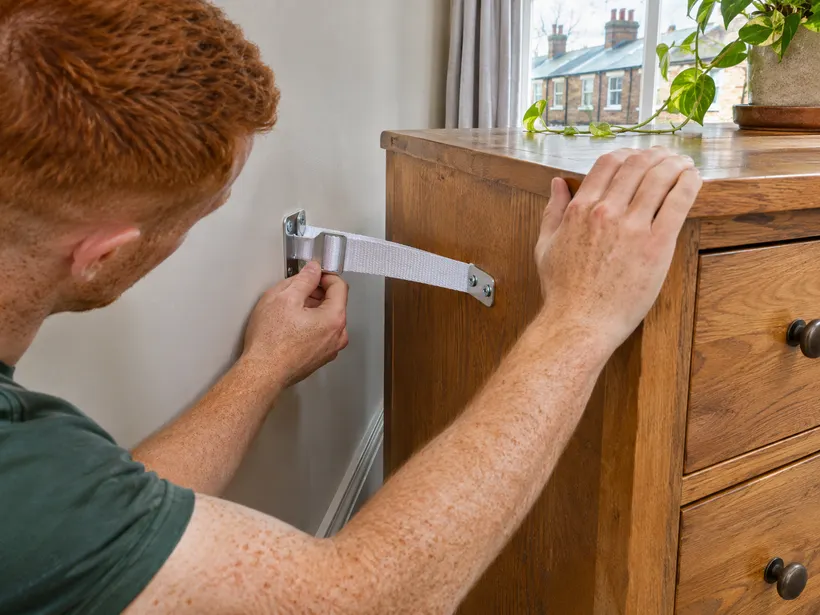
Prepare the room and check for missing components
Empty or clear the area around the furniture where practical, and provide room to reach the relevant side or back. If a large item needs moving to reach the wall, tell us beforehand. Keep the instructions, hardware and any original labels to hand. If the furniture is still boxed, check whether the restraint arrives in a separate pack.
Mention visible damage, loose joints or a missing bracket before the visit. If a part is no longer available, ask the retailer or manufacturer about the correct replacement. Do not use furniture in a way that conflicts with its instructions. Tell us if the item was previously fixed in another room, as the new position may have different wall and clearance conditions.
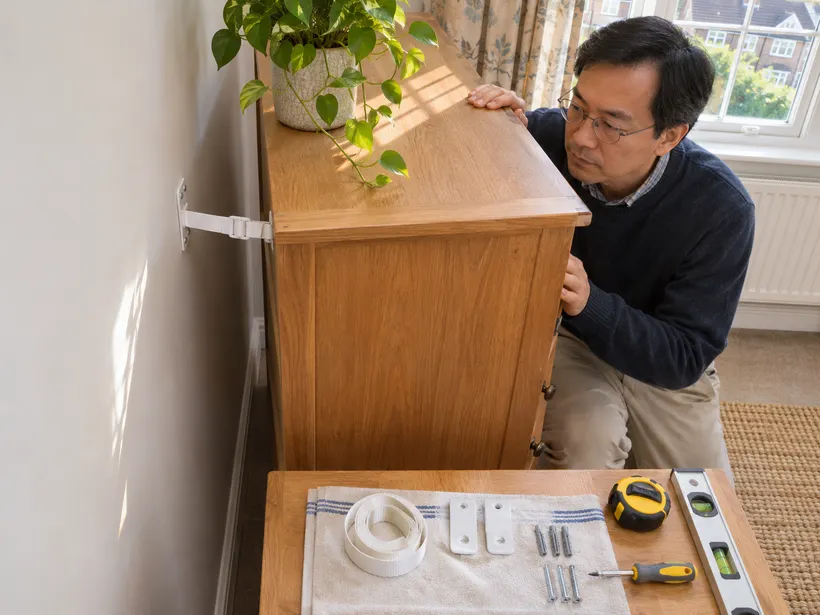
Review the work and retain the instructions
On arrival, show the unit, manufacturer instructions and proposed position. Discuss any differences between the photos and the wall on the day. The furniture and wall both need to be considered before the work goes ahead. If the conditions do not support the proposed fixing, clarify what needs to change before using the item.
Afterwards, review the agreed position and keep the manufacturer information for future use. If the furniture is moved, check the requirements again for the new location. Do not assume a previous fixing remains suitable after a change in position or wall. Retain the item reference for replacement parts or follow-up enquiries.
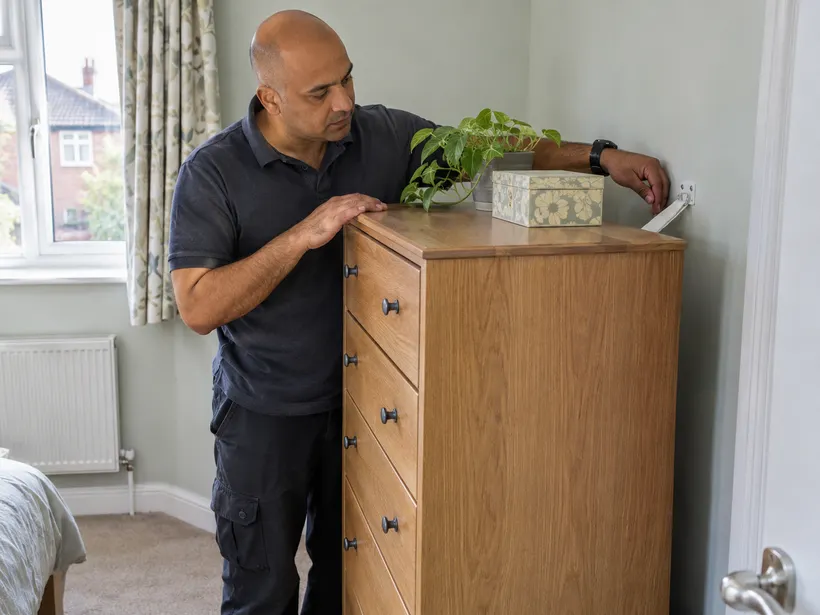
Request a quote for one or more furniture restraints
Send the postcode, model and instructions for each unit. Include photos of the intended wall and any fittings you already have. State whether you want assembly, restraint fitting or both. For several rooms, identify the unit and wall for each. If you have an existing fixing that needs reviewing, show it in the photos.
Tell us whether the furniture is ready and whether you have permission to arrange the work. If a retailer is sending parts, provide the expected date. Check the quote against the unit list and the work discussed. If the location or furniture changes before the visit, send the updated details so the arrangements can be reviewed.
For a matching set of storage units
List each model individually even when the units look alike. The instructions can differ with height, width or drawer configuration. Mark the unit positions on a photo or simple sketch. If the furniture is being used with separate storage inserts, keep those details with the relevant model rather than assuming they affect all units in the same way.
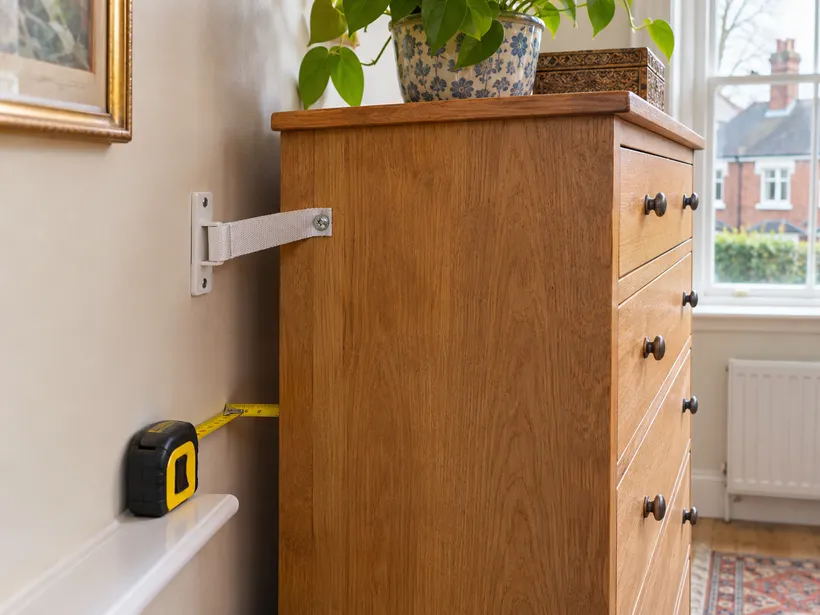
Record the model and fixing guidance for future moves
Keep the furniture instructions in a place where you can find them later. If you move the unit to another wall, check the instructions again and assess the new position before using it. A new room can have a different surface, skirting or clearance, even when the furniture itself has not changed.
For more than one tall unit, record which model and restraint belong together. If a retailer sends a replacement part, retain its reference and follow the manufacturer’s guidance. If you are adding another frame to an existing arrangement, send pictures of both and explain what will change before requesting further work.
Details to confirm before the visit
| Check | What to consider |
|---|---|
| New and boxed | Send the model and planned position |
| Built and in use | Share photos of the back, wall and restraint |
| Previously altered | Describe the changes and any damaged components |
| Check | What to consider |
|---|---|
| Manufacturer instructions | Identify the required restraint |
| Wall details | Show skirting, obstacles and known wall type |
| Permission | Confirm with the owner where needed |
What to send for your quote
| Job detail | What to send |
|---|---|
| New furniture | Model, assembly status and restraint |
| Existing furniture | Condition, position and available fixings |
| Rented property | Wall permissions and restrictions |
Questions before booking
For work booked alongside this service, see shelf installation and picture and mirror hanging.
Can I ask for fixing on already assembled furniture?
Yes. Send its model, instructions and clear photos of the position.
What if the original restraint is missing?
Identify the model and check with the manufacturer for the specified part.
Can I combine assembly and fixing?
Include both in the enquiry and confirm the required work before booking.
Can you use the wall restraint supplied with the furniture?
We check the restraint against the manufacturer’s instructions and the intended fixing location. The attachment to the wall depends on its construction.
Can a restraint be fitted if the skirting leaves a gap?
We assess how far the unit stands off the wall and whether the supplied restraint can be positioned as intended. The gap can affect which fixing arrangement is suitable.
Request a quote
Send the manufacturer instructions, a photo of the restraint and a wide photo of the proposed wall.