
Flat Pack Furniture Assembly in London
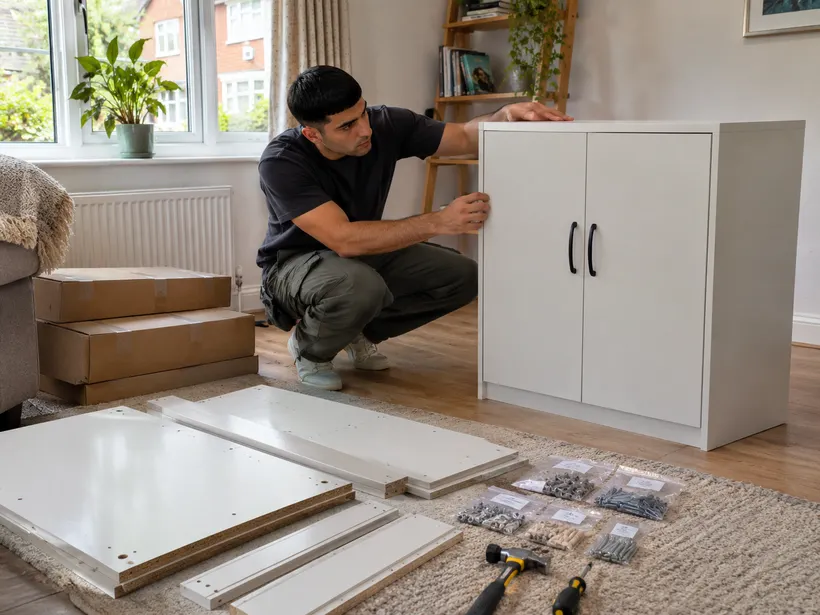
We identify the parts against the manufacturer’s drawings, build the frame in sequence and fit shelves, runners and handles. We check that the finished frame is square and that its moving parts work before handover.
Have boxed furniture ready to build? Send the retailer links and carton details so we can identify each model and its fittings.
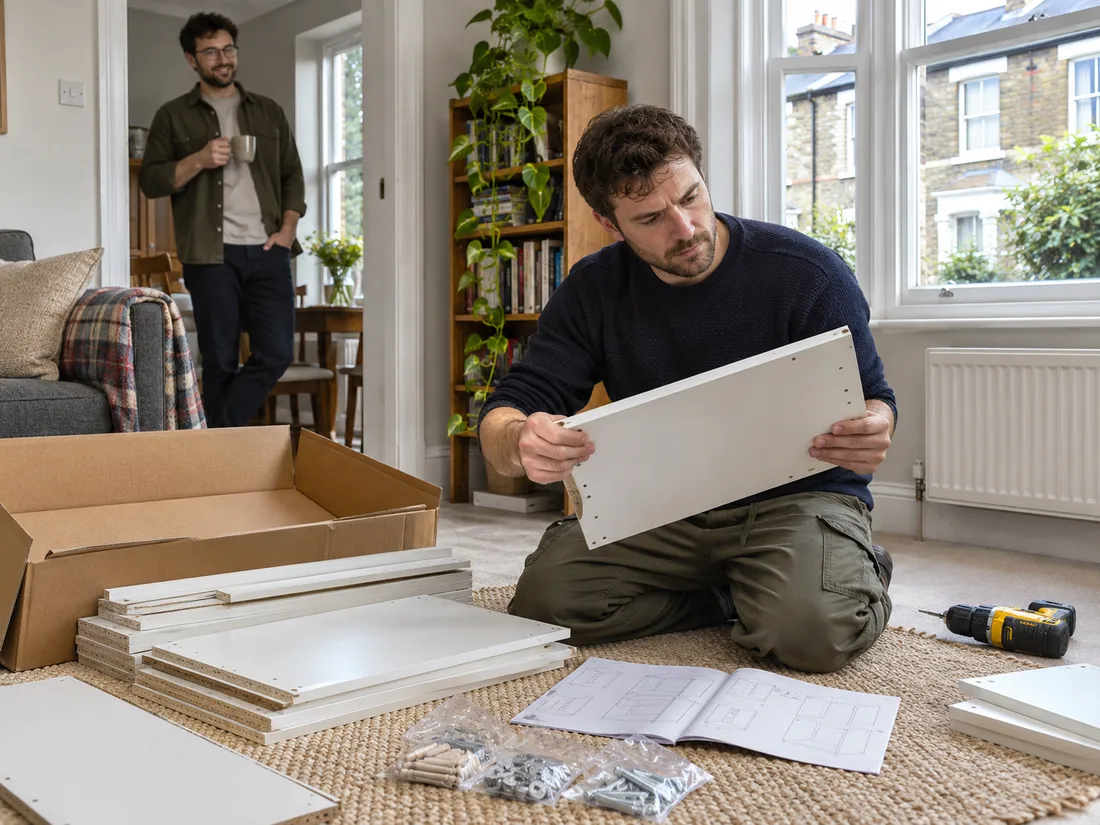
- Boxed furniture
- Retailer product codes
- Supplied fittings
What to check before booking
Use the label on the box
Send the model or article number. A product name can cover several sizes, and the front panels, legs or rails may have their own labels. Let us know if a carton is still at the retailer.
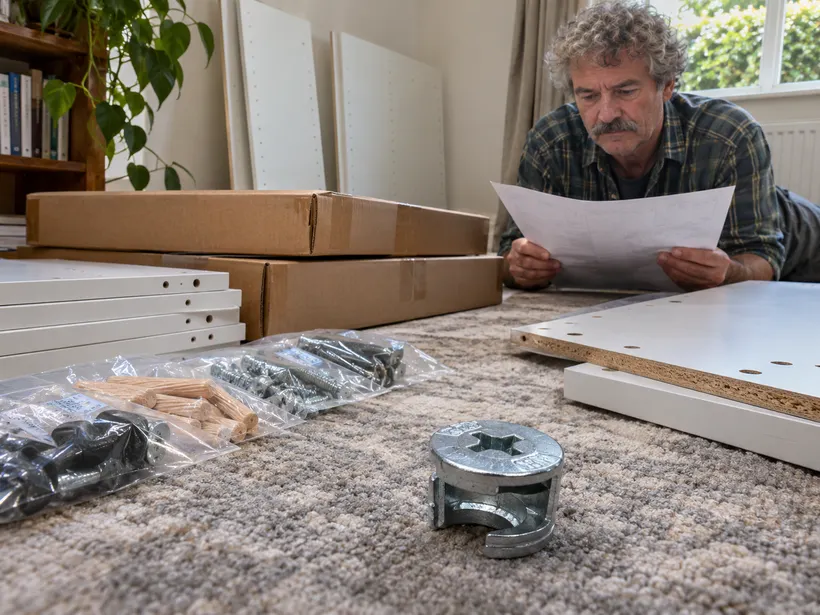
Keep the supplied hardware with the panels
Leave the instructions and sealed fittings with the right box. If the packs are already open, say which parts were separated. If a previous assembly attempt left damaged panels or loose joints, show those in photos before arranging a visit.
Check parts before requesting a visit
Match the carton numbers to the retailer’s confirmation. Missing structural pieces can prevent a build. If the retailer is sending replacements, tell us which items are affected and when the parts are expected.
Find the exact model before asking for a quote
The retailer label or order confirmation is usually the quickest way to identify flat pack furniture. Give the product code, size and finish if the model comes in several versions. A cabinet described as a two-door unit might have different heights or a drawer option. A desk might share its name with a corner version. The code helps us identify the build without making assumptions from the name.
If the furniture was bought second-hand or the box is no longer available, send photographs of the instructions and any identifying label. A picture of the finished product or an old listing can help, especially if the packs have been opened. Tell us if the furniture is new, partly assembled or previously dismantled. Those are different starting points, even for the same model.
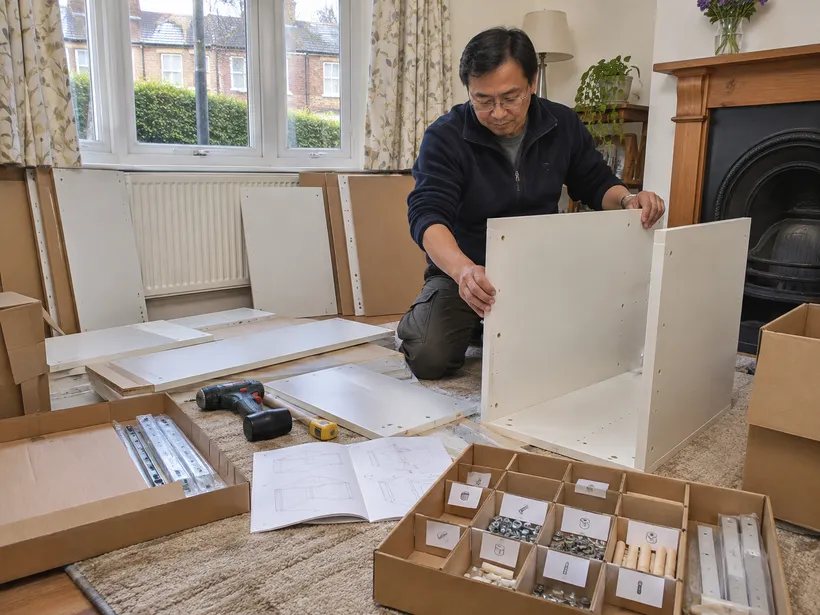
Check that the order includes every pack
Some items have one carton, while others are split between several boxes. Read the pack numbers, then compare them with the order confirmation. Separate slats, drawer packs, rails and door fronts can be easy to overlook because the main box has already arrived. For a modular order, check that the quantities on the labels match the number of frames you want built.
If the retailer is sending replacements, keep the affected item separate from the rest of the order. Tell us whether a small fitting is missing or whether it is a panel, support or mechanism. That detail matters because a missing handle may affect only the final finish while an absent structural part can stop the main build. Send the updated list before confirming the visit.
Keep the instructions and hardware with each item
You can leave the cartons sealed if the labels are visible and the boxes are together. If you have opened them, keep each hardware bag with the matching panels and instructions. Similar screws, connectors and brackets may be intended for different products. Sorting everything into one container can make it harder to identify which fittings belong to which item.
If someone has started the assembly, tell us what they did and send a photo of the current state. Show any loose joints, damaged holes or panels that were fitted in the wrong position. Keep the remaining parts and the original instructions available. It is useful to know whether the furniture can be safely handled before agreeing what the visit should cover.
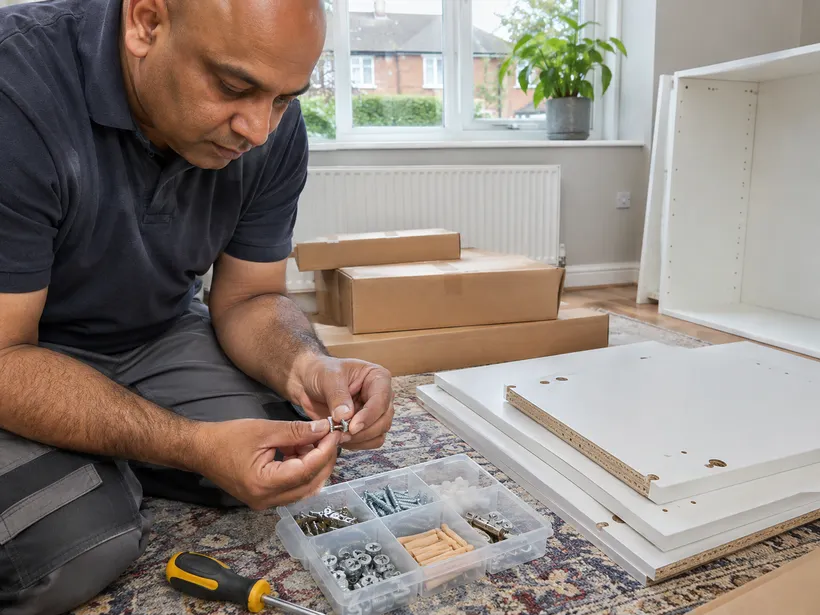
Prepare the build space and final position
Clear a floor area close to where the furniture will stand. Long panels may need to lie flat during part of the build. Move loose objects, boxes and small pieces away from the work area. If the furniture is in a narrow room or under a sloping ceiling, send dimensions or a photo so we can discuss the available space.
Show which way doors should open and where any drawers or extensions need clearance. Tell us if the product instructions call for a wall restraint or if drilling is restricted. If the furniture is going in a rented property, check permission before arranging work that involves the wall. Send the manufacturer information with your enquiry so that part of the job can be discussed.
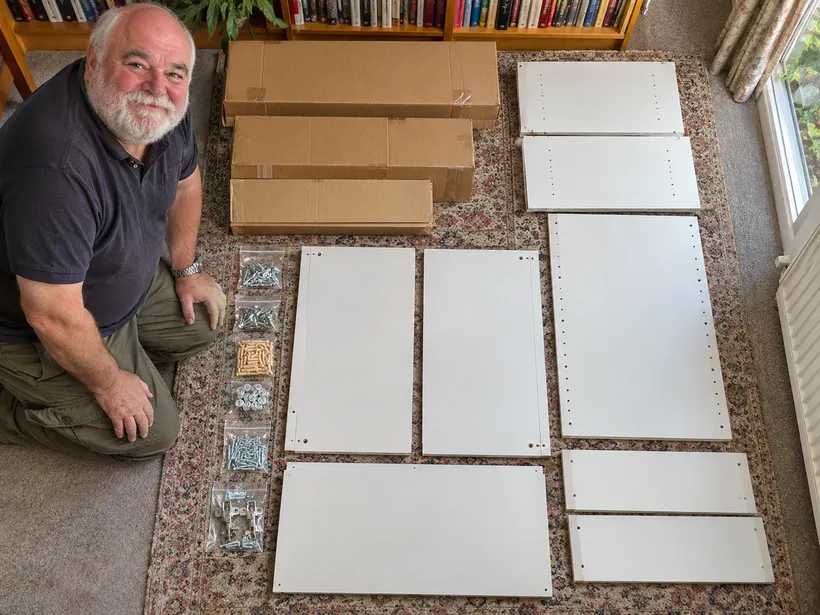
From unpacking to the finished item
At the start of the visit, show the assembler the product list and where each carton is. We bring the assembly tools and use the fittings supplied for the furniture. Identify any parts you opened or moved. If there are separate accessory packs, point those out before the frame goes together so the planned configuration is clear.
When the item is finished, review the position and any moving parts with the assembler. Compare the shelves, drawers or doors with the arrangement you asked for. If a retailer-supplied part is damaged, retain the label and keep the instructions. A photo and the relevant part reference can help when you ask the retailer for a replacement.
Get a quote for a single carton or a larger order
For one item, give the model, postcode and room. For several items, send a separate line for every model and quantity. If some boxes are already at the address and others are at the retailer, explain which ones need collecting and which are ready to build. Include access information if the boxes still need to reach an upper floor or a restricted area.
Check that the quote covers the actual configuration you bought. An optional drawer pack, a different top or a changed frame can affect the work. If the retailer gives you a later delivery date for an essential carton, let us know before arranging assembly. That is especially useful when the whole order is intended for one room or visit.
Recognise differences between similar flat packs
Compare the order labels before assuming that pieces with the same finish are interchangeable. A drawer unit can have a different depth or runner arrangement from the matching desk. One bed size may use a different centre support from the next size up. If you are buying replacement parts, use the exact article number from the model you already have.
Keep instructions for each finished item. They can help identify a replacement fitting later, particularly if you lose a handle or need to move the furniture. If the manufacturer supplies more than one assembly configuration, mark which one you used. This can be useful when a matching unit is ordered or when someone needs to rebuild the furniture after a move.
Details to confirm before the visit
| Check | What to consider |
|---|---|
| Model number | Distinguishes dimensions and product versions |
| Pack number | Identifies which box within a multi-carton product is present |
| Separate hardware | Shows whether the fitting kit came in a different pack |
| Check | What to consider |
|---|---|
| Unopened | Leave carton labels visible |
| Open but complete | Keep panels and parts grouped by model |
| Missing or damaged | Send photos and the retailer reference |
What to send for your quote
| Job detail | What to send |
|---|---|
| Sealed boxes | Keep model and carton numbers visible |
| Opened packs | Group hardware with matching panels |
| Partly built furniture | Send photos of joints and missing parts |
Questions before booking
For work booked alongside this service, see dismantling and reassembly and furniture collection and delivery.
Do I need to unpack the furniture?
Keep the packs and instructions together. You can leave them unopened.
Can you build an item that is partly assembled?
Send photos and the model so we can review what remains.
How do I identify a missing pack?
Compare the individual carton labels with the order confirmation.
What happens when fittings look almost identical?
We match them to the diagrams and the intended fixing positions. Similar screws or dowels can have different lengths and uses.
How do you check a cabinet is square?
We align the frame before securing its back and check how the doors or drawers sit and move once the cabinet is standing.
Request a quote
Send the product code and carton numbers. If the furniture has been opened or partly built, include a photo.