
Chest of Drawers Assembly in London
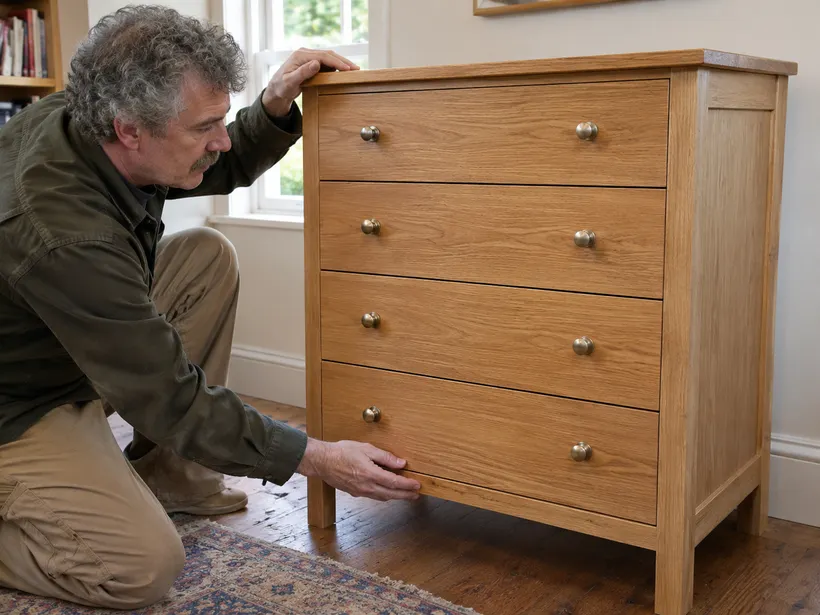
We build the carcass, square it before securing the back, and fit the runners at the positions shown in the instructions. We assemble each drawer with its base, sides, front and handle, then check travel, gaps and whether any drawer binds.
Send the chest model, drawer count and room details. Include any separate runners, fronts and manufacturer fixing instructions.
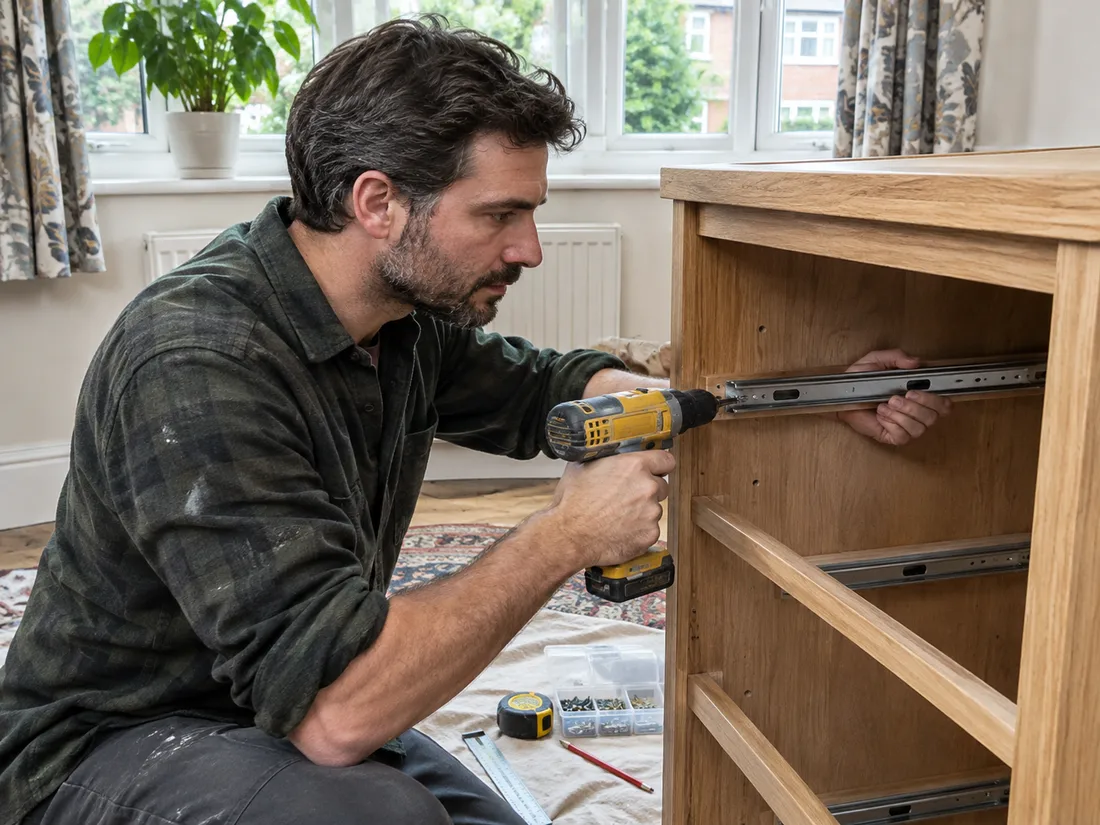
- Wide chests and tallboys
- Drawer fronts and runners
- Wall restraint details
How we assemble and check a chest of drawers
Carcass and drawer configuration
We match the cabinet sides, rails and back to the configuration before assembling individual drawers. A narrow tallboy can have different runners or supports from a low dresser, even when both come from the same range.
Drawer opening and clearance
We consider the space in front of the chest as well as its footprint. Once it is in position, we open drawers to their intended travel and look for interference from a bed, an opening door or furniture opposite.
Checks on the finished chest
We compare the order of the fronts with the manufacturer’s layout and check how the drawers move. When a runner is damaged or missing, the model and part reference help identify the replacement.
Building the carcass and matching the drawer fronts
A tallboy is built around a narrow upright frame, while a low dresser may use wider panels, additional dividers or a combination of drawer sizes. We use the model and diagrams to identify those differences before fixing the back. Where fronts come in separate packs, we match the drillings and sizes to the intended openings.
We keep the chest fittings separate from hardware for matching wardrobes and bedside units. A front may have the same finish across a range but a different width or set of drillings. Keeping the parts with their intended cabinet helps us fit the correct pieces before checking alignment.
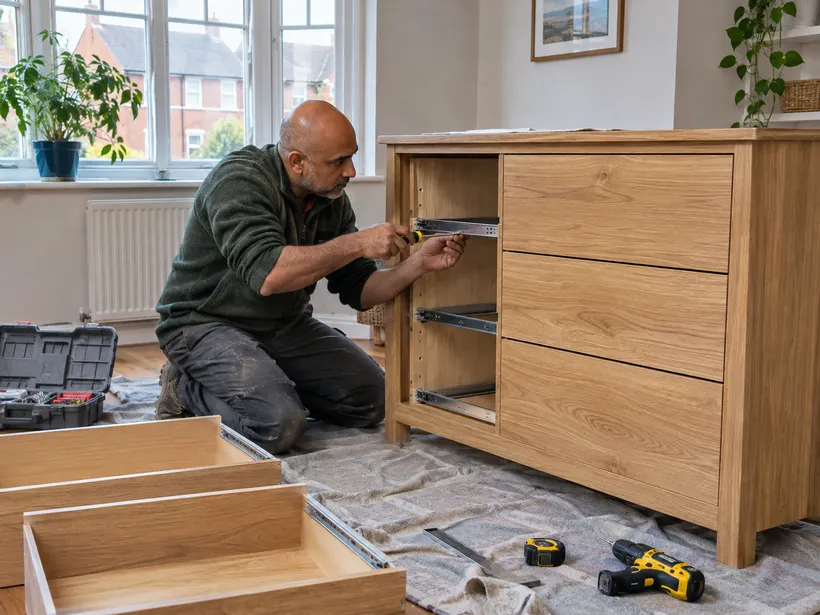
Positioning the chest and checking clearance
We check whether the deepest drawers can open far enough to be used and removed as the model allows. The available space can change when a bedroom door opens into the same area. We consider that movement before settling the chest into its final position.
A sill, alcove or projecting skirting can affect where the cabinet sits. We take those features into account when positioning the carcass and check the position against any manufacturer-required wall restraint. Wider models also need space for the large panels during assembly.
Matching runners and fasteners to each drawer
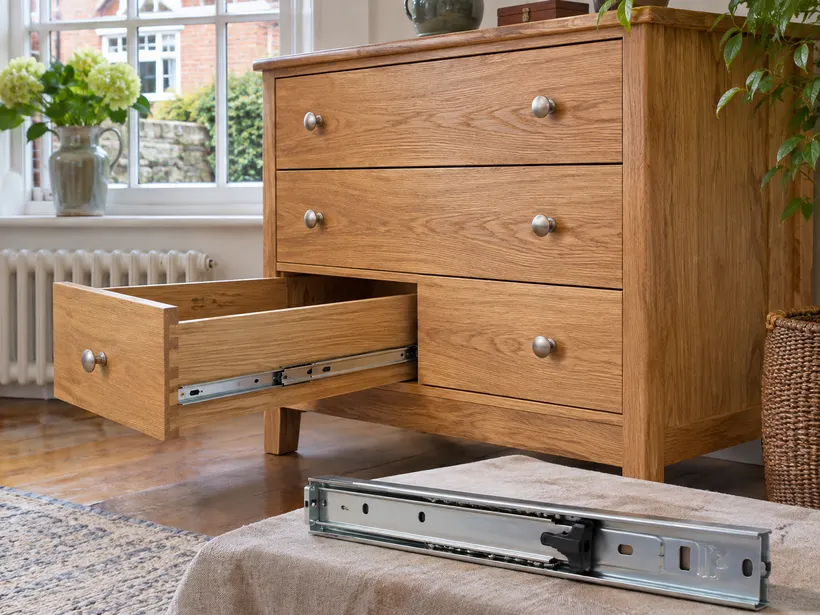
We identify runners by position and orientation before attaching them to the cabinet sides. A small top drawer may use different rails from a full-width drawer. We fit each drawer’s sides, base and front with the hardware supplied for its position and check that the drawer engages with both runners.
A chipped front can sometimes be left off while independent parts of the job go ahead. A bent runner can prevent that drawer from being fitted or checked. We identify the affected drawer and its part reference so the correct item can be requested from the retailer.
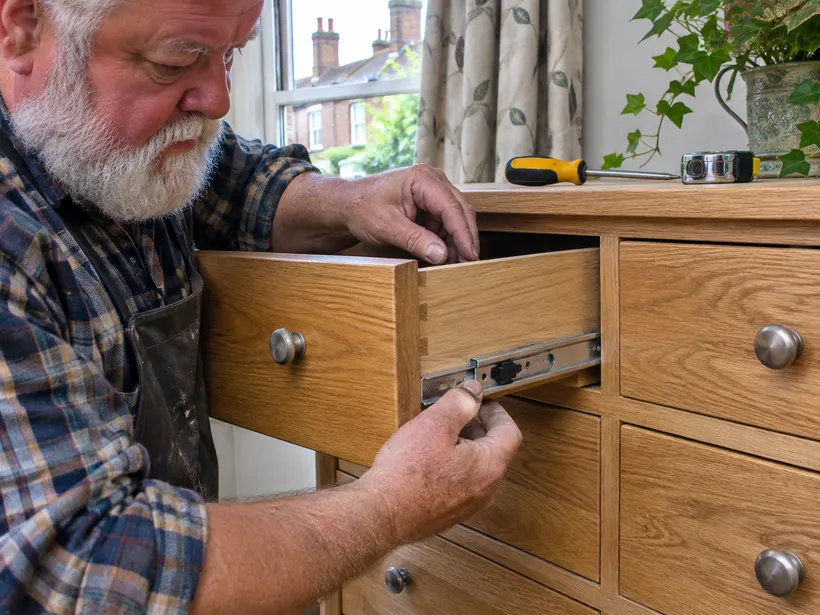
Assessing the manufacturer’s wall restraint
We read the manufacturer’s restraint instructions and check the cabinet’s fixing points against the wall position. Skirting depth, the wall surface and permission to drill can affect what can be fitted. For an existing chest, we also need to assess the condition of the original fixing points.
An already assembled chest starts with a check of the frame and rear fixing points. If fittings are missing or the back has been altered, the model instructions help establish which parts are needed and whether the manufacturer’s arrangement can be followed.
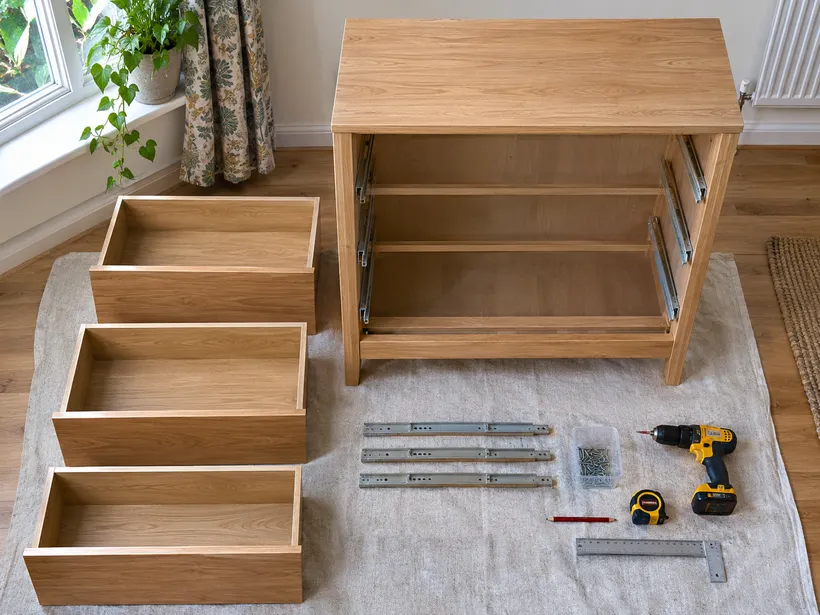
Testing drawer positions and movement
We use the carton labels and instructions to match components before starting the build. For chests with split upper drawers or mixed depths, we separate the hardware and fronts by position. Handles supplied separately are matched to the relevant fronts before handover.
At handover we check the drawer order, the gaps between fronts and whether the handles are secure. We open and close each drawer to check for binding and look at how the chest sits alongside other pieces. If we find an issue caused by a missing or damaged component, we explain which part is affected.
Request a quote for one chest or several rooms
Give us the product link, quantity and postcode. Include the number of drawers, any separate fronts and the final room. If you have several models, list them individually. Tell us if any cartons still need collecting or if the furniture is already at the property and ready to assemble.
If the chest will be built alongside a bed or wardrobe, include the other model numbers in the same enquiry and mark what goes where. Mention narrow stairs, low ceilings or a crowded work area. If the retailer is sending part of the order later, identify which chest is affected so the visit can be discussed around the available parts.
Plan the work when a chest is replacing existing storage
If you are replacing a chest, tell us whether the old piece will be out of the way before the visit. Empty the drawers if it needs to be moved or dismantled and tell us which parts of the room must stay accessible. If you want the new unit placed between existing furniture, include the gap, skirting and the room needed to open each drawer.
For a matching set, check which unit has the deeper drawers and whether the handles or feet were ordered separately. Keep the order paperwork with the finished piece. If one drawer front is missing or has been substituted, record which position it belongs to and send the retailer the model or article number. Tell us if a replacement needs fitting later so the two visits can be discussed separately.
If somebody else is receiving the furniture, give them the item list and final position. A full view of the room is useful if the unit needs to align with a bed or wardrobe.
Details to confirm before the visit
| Check | What to consider |
|---|---|
| Full width | Check clearance across the whole front |
| Split top drawers | Identify the intended positions of small fronts |
| Deep drawers | Keep the matching runners and components together |
| Check | What to consider |
|---|---|
| Near a bed | Leave space for the drawers to travel |
| Against skirting | Tell us about projections at floor level |
| With restraint | Send the manufacturer instructions before booking |
What to send for your quote
| Job detail | What to send |
|---|---|
| Tallboy | Height, drawer count and fixing requirements |
| Wide dresser | Front clearance and separate runner packs |
| Matching set | Article numbers for each unit |
Questions before booking
For work booked alongside this service, see furniture wall fixing.
What if my drawer fronts came in separate cartons?
Keep the front packs with their matching chest and send the order list.
Does my chest need fixing to the wall?
Check the manufacturer instructions and send them with your wall details.
Can I book two matching units?
Yes. Give the total count and tell us if the units go to different rooms.
What do you check if one drawer catches after assembly?
We check that the drawer is on the correct runners, that both runners are seated and that the front clears adjacent drawers. We also check whether the cabinet is square.
Can two drawer fronts look the same but fit different positions?
Yes. Fronts, runners and drillings can vary by drawer position. We match them to the instructions before fitting the drawers and checking their gaps.
Request a quote
We assemble chests of drawers for bedrooms, dressing rooms and other storage areas. The model number identifies the frame, drawer widths and runners supplied with the chest.